







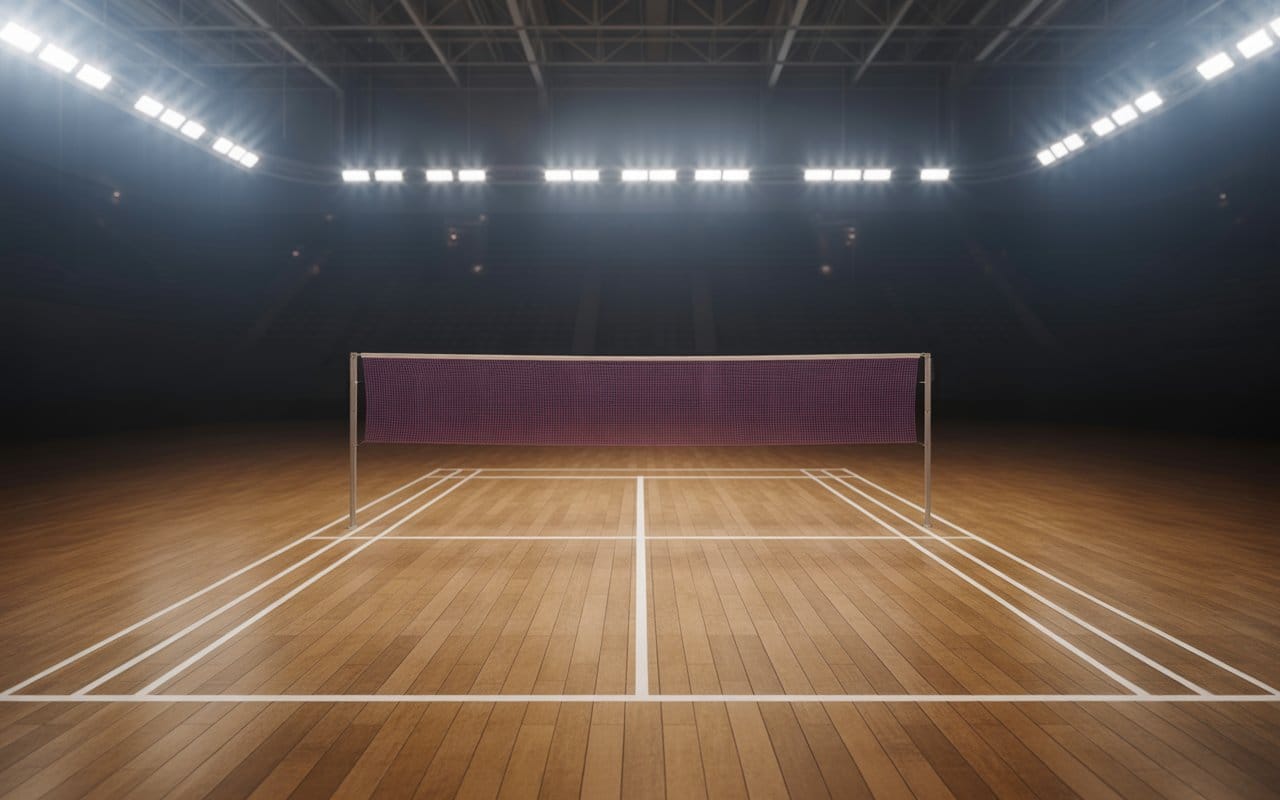
Understanding badminton court dimensions is essential whether you are a beginner learning the basics, a professional player preparing for tournaments, or someone planning to build a badminton court. Correct measurements ensure fair play, safety, and compliance with international standards set by the Badminton World Federation (BWF).
In this detailed guide by The Alert Media, we’ll break down official badminton court dimensions for singles and doubles, explain line markings, net height, and court layout, and answer common questions players often have.
Official Badminton Court Dimensions (As Per BWF)
According to international standards, badminton courts are rectangular and marked with precise lines. The badminton court differ slightly for singles and doubles matches.
Standard Court Size
- Total length: 13.40 meters (44 feet)
- Total width (doubles): 6.10 meters (20 feet)
- Total width (singles): 5.18 meters (17 feet)
These badminton court are used worldwide in professional tournaments, academies, and training centers.
Badminton Court Dimensions for Singles
Singles matches use a narrower court width while maintaining the same length.
Singles Court Measurements:
- Length: 13.40 meters
- Width: 5.18 meters
- Short service line distance from net: 1.98 meters
- Long service line for singles: Back boundary line
In singles play, the side tramlines are not used. Knowing the correct badminton court dimensions for singles helps players improve positioning and shot accuracy.
Badminton Court Dimensions for Doubles
Doubles matches use the full width of the court, making positioning and coordination more important.
Doubles Court Measurements:
- Length: 13.40 meters
- Width: 6.10 meters
- Short service line distance: 1.98 meters from the net
- Long service line for doubles: 0.76 meters inside the back boundary
These badminton court ensure fair service rules and prevent players from gaining an unfair advantage.
Badminton Court Line Markings Explained
Understanding court lines is as important as knowing the badminton court dimensions.
Key Lines on a Badminton Court:
- Center line: Divides left and right service courts
- Short service line: Indicates the minimum distance for a legal serve
- Long service line: Different for singles and doubles
- Singles sideline: Inner side boundary
- Doubles sideline: Outer side boundary
All lines should be 40 mm wide and clearly visible, usually in white or yellow color.
Net Height and Placement
Net placement plays a crucial role in maintaining official badminton court dimensions.
Net Specifications:
- Height at posts: 1.55 meters
- Height at center: 1.524 meters
- Net width: 6.10 meters
- Net depth: 760 mm
The net must be placed exactly at the center of the court, dividing it into two equal halves.
Minimum Space Required Around the Court
Apart from standard dimensions, sufficient free space around the court is required for safety.
Recommended Clearance:
- Side clearance: Minimum 1.25 meters
- Back clearance: Minimum 2 meters
- Ceiling height: At least 9 meters for professional play
Proper spacing helps avoid injuries and allows players to move freely during intense rallies.
Indoor vs Outdoor Badminton Court Dimensions
While the basic court dimensions remain the same, outdoor courts require extra considerations.
- Indoor courts are preferred due to wind-free conditions
- Outdoor courts may need wind barriers and anti-slip flooring
- Line markings and net height must still follow standard dimensions
For professional matches, indoor courts are mandatory.
Importance of Correct Badminton Court Dimensions
Using accurate court dimensions is essential because:
- It ensures fair competition
- Improves skill development
- Prevents rule violations
- Meets tournament and academy standards
Incorrect court measurements can affect player performance and may even lead to match disqualification in official events.
Badminton Court Construction and Layout Guidelines
When planning to build a badminton court, understanding construction and layout considerations beyond basic badminton court dimensions is extremely important. The orientation of the court plays a key role in player comfort, especially in outdoor or semi-open facilities. Ideally, badminton courts should be aligned in a north–south direction to avoid direct sunlight affecting players’ vision during serves and rallies. Flooring preparation is another crucial aspect. The base surface must be perfectly level to ensure accurate line markings and consistent bounce.
Even minor unevenness can impact footwork and increase the risk of injury. Professional courts use shock-absorbent layers beneath the playing surface to reduce stress on knees and ankles during long matches. Proper drainage systems are also essential, particularly for outdoor courts, to prevent water accumulation that could damage the surface and make it slippery. Additionally, line marking accuracy must strictly follow official badminton court dimensions, as even small deviations can lead to confusion during matches. Using durable, anti-fade paint for lines ensures long-term visibility. Posts supporting the net should be firmly anchored and positioned exactly on the doubles sideline to maintain correct net tension and height. Investing time and resources into correct court construction ensures durability, player safety, and long-term compliance with international standards.
Lighting Requirements for a Badminton Court
Lighting and maintenance are equally important factors that directly affect the usability of a badminton court. Proper lighting ensures players can track the shuttle clearly without glare or shadows. For indoor courts, evenly distributed LED lighting is recommended, with light fixtures placed high enough to avoid interference during high clears and smashes. The recommended lighting intensity for professional play is around 500–750 lux, while recreational courts can function well at lower levels. Regular maintenance helps preserve correct badminton court areaover time.
Common Mistakes to Avoid While Building a Badminton Court
Line markings should be inspected periodically for wear and repainted if they fade or chip. Nets should be checked for sagging and replaced when tension weakens. Flooring must be cleaned regularly to prevent dust buildup, which can cause slipping. For synthetic or PVC surfaces, using manufacturer-approved cleaning solutions helps extend lifespan. Facility owners should also inspect the surrounding free space to ensure it remains clear of obstacles, as cluttered sidelines can lead to injuries. Even temperature and humidity control matter, especially indoors, since extreme conditions can affect flooring grip and shuttle speed. By maintaining lighting, flooring, and markings properly, players experience consistent playing conditions that support skill development and fair competition. A well-maintained court not only meets professional standards but also enhances player confidence, comfort, and overall performance.
Common Flooring Used for Badminton Courts
Although not part of the badminton court size , flooring greatly impacts gameplay.
Popular options include:
- Wooden flooring
- Synthetic PVC mats
- Acrylic surfaces (mainly for training)
The surface should be non-slip and shock-absorbent.
FAQs: Badminton Court Dimensions
Q1. What are the standard court dimensions?
The standard badminton dimensions are 13.40 meters in length and 6.10 meters in width for doubles, and 5.18 meters in width for singles.
Q2. Are court dimensions the same worldwide?
Yes, all professional and international courts follow BWF-approved court dimensions.
Q3. What is the net height in a badminton court?
The net height is 1.55 meters at the posts and 1.524 meters at the center.
Q4. What is the difference between singles and doubles court dimensions?
The length remains the same, but singles courts are narrower, while doubles courts use the full width.
Q5. Can I adjust badminton court dimensions for home use?
For casual play, minor adjustments are acceptable, but official court dimensions are required for tournaments and training academies.
Knowing the correct badminton court dimensions is essential for players, coaches, and facility owners. Whether you’re setting up a court, learning the rules, or improving your gameplay, accurate measurements ensure consistency, fairness, and professional standards.
For more sports guides, fitness tips, and informative blogs, stay connected with The Alert Media.