







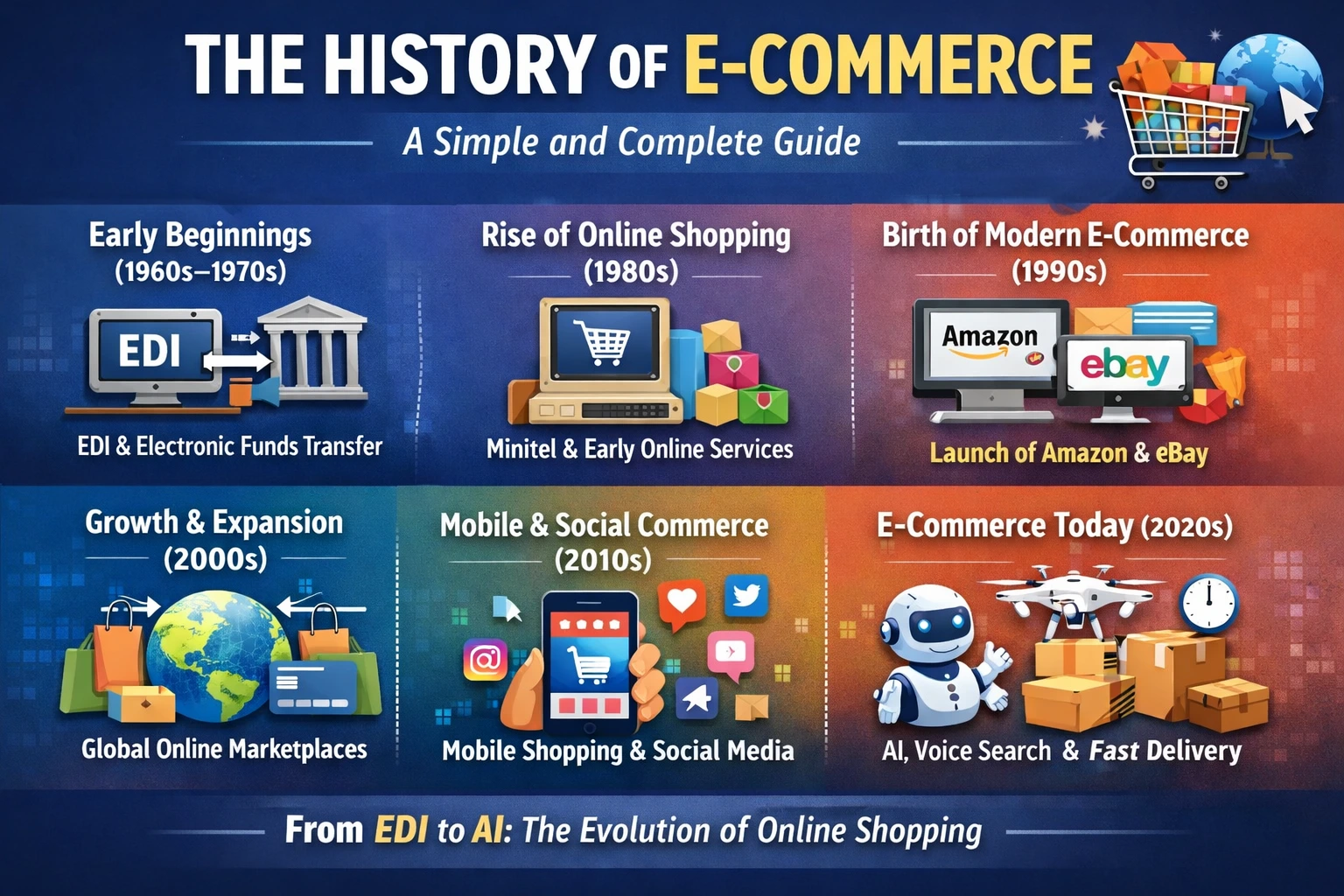
The internet has changed the way we buy and sell products. Today, shopping online is a normal part of daily life. But this was not always the case. To understand how online shopping became so popular, we must look at the history of e commerce and how it developed step by step.
E-commerce stands for electronic commerce. It means buying and selling goods or services using the internet or electronic systems. From small online stores to global platforms like Amazon and Alibaba, e-commerce has come a long way. Let us explore the journey of online business in a simple and easy way.
What Is E Commerce?
Before learning the history of e commerce, it is important to understand what e-commerce actually means.
E-commerce is the process of selling or purchasing products and services through electronic networks, mainly the internet. It includes online shopping websites, mobile apps, digital payments, and online services.
Examples of e-commerce include:
- Online shopping websites
- Digital payment systems
- Online booking platforms
- Subscription-based services
Early Beginnings of E Commerce (1960s–1970s)
The history of e commerce started much earlier than most people think. It did not begin with websites or smartphones.
In the 1960s, businesses started using Electronic Data Interchange (EDI). This system allowed companies to exchange documents like invoices and orders electronically. It was mainly used by big companies and government organizations.
During the 1970s, electronic fund transfer (EFT) systems were introduced. These systems allowed money to be transferred digitally between banks. Although common people did not use it, this technology laid the foundation for future e-commerce.
The Rise of Online Shopping (1980s)
The 1980s were an important phase in the history of e commerce. During this time, personal computers became more common.
In 1982, France introduced a system called Minitel. It allowed users to order products, book tickets, and check directories through a telephone connection. This was one of the first examples of online shopping for the public.
Although the internet was not widely available yet, these developments showed the potential of electronic buying and selling.
Birth of Modern E Commerce (1990s)
The real history of e commerce began in the 1990s with the invention of the World Wide Web.
In 1991, the internet became open for commercial use. This was a major turning point. Businesses could now create websites and sell products online.
Some major events of this period include:
- 1994: First secure online transaction
- 1995: Launch of Amazon and eBay
- Introduction of online payment systems
People slowly started trusting online shopping. E-commerce was still new, but it was growing fast.
Growth and Expansion (2000s)
The 2000s marked rapid growth in the history of e commerce. Internet access became faster and cheaper. More people started using computers and mobile phones.
During this time:
- Online marketplaces expanded globally
- Payment gateways improved
- Customer reviews became popular
- Businesses started focusing on user experience
Many traditional shops also created online stores to reach more customers. E-commerce became a strong competitor to physical stores.
Mobile and Social E Commerce (2010s)
The 2010s brought another major change in the history of e commerce with the rise of smartphones.
People could now shop anytime and anywhere. Mobile apps made online shopping easier and faster. Social media platforms also became powerful tools for selling products.
Key developments included:
- Mobile-friendly websites
- Shopping through social media
- Digital wallets and UPI payments
- Personalized shopping experience
E-commerce was no longer limited to websites. It became part of daily digital life.
E Commerce in the Present Time (2020s)
Today, the history of e commerce has reached an advanced stage. Online shopping is faster, safer, and smarter than ever before.
Modern e-commerce uses:
- Artificial Intelligence (AI)
- Chatbots
- Voice search
- Same-day delivery
- Subscription models
The COVID-19 pandemic also increased online shopping worldwide. Many people who never shopped online before started using e-commerce platforms.
Importance of E Commerce Today
Understanding the history of e commerce helps us see why it is so important today.
Benefits of e-commerce include:
- Convenience
- Wider product choices
- Lower costs
- Global reach
- Easy comparison
Both small and big businesses now depend on e-commerce for growth.
Future of E Commerce
The history of e commerce shows constant change and innovation. In the future, e-commerce is expected to grow even more.
Future trends may include:
- Virtual reality shopping
- AI-based recommendations
- Faster delivery using drones
- More secure payment systems
E-commerce will continue to evolve with technology.
FAQs on History of E Commerce
1. What is meant by the history of e commerce?
The history of e commerce refers to the development of online buying and selling from early electronic systems to modern internet-based shopping platforms.
2. When did e commerce start?
The early form of e-commerce started in the 1960s with Electronic Data Interchange (EDI), but modern e-commerce began in the 1990s with the internet.
3. Who started e commerce?
There is no single person who started e-commerce. It developed gradually with contributions from technology innovators and businesses.
4. Why is the history of e commerce important?
Learning the history of e commerce helps us understand how online business evolved and why it is important in today’s digital world.
5. How has e commerce changed over time?
E-commerce has changed from basic electronic transactions to advanced online platforms with mobile apps, AI, and fast delivery.
Conclusion
The history of e commerce is a story of innovation, technology, and changing consumer habits. From simple electronic transactions to advanced online marketplaces, e-commerce has transformed the way we shop and do business.
As technology continues to grow, e-commerce will keep evolving and creating new opportunities for businesses and customers around the world.